
Sleep · Treatment · 4 min read
CBT-I comes first, not a pill
What the major guidelines recommend for chronic insomnia, what's in it, and how long it takes.
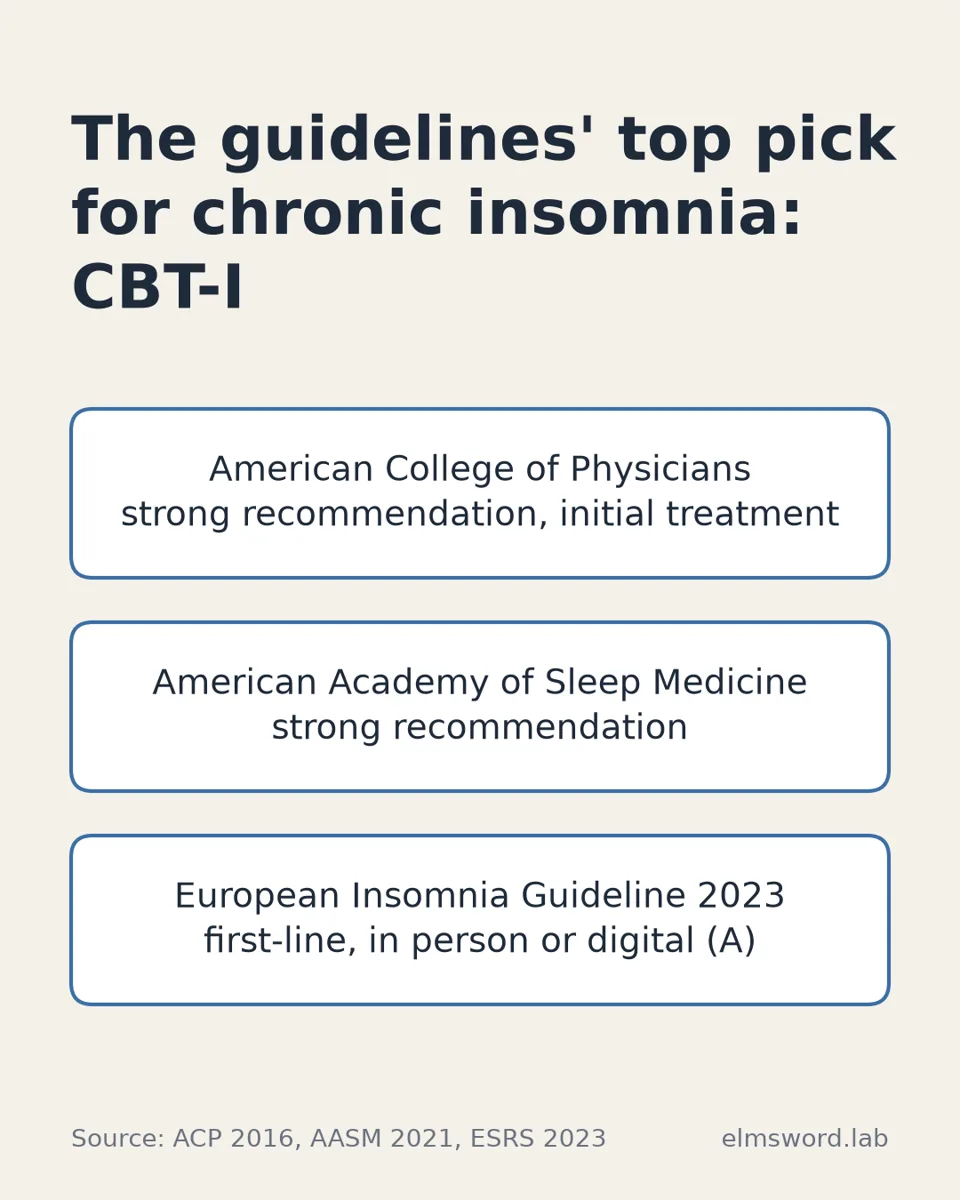
For chronic insomnia, the top treatment in the major guidelines isn't a pill. It's CBT-I, cognitive behavioral therapy for insomnia.
What's in it
- education about how sleep is regulated
- stimulus control (guide)
- sleep restriction (guide)
- work on unhelpful thoughts about sleep
- often relaxation and sleep hygiene too
It's usually done with a trained provider, in person, in a group, or through an online program. Worth asking your doctor about.
It takes weeks, not nights
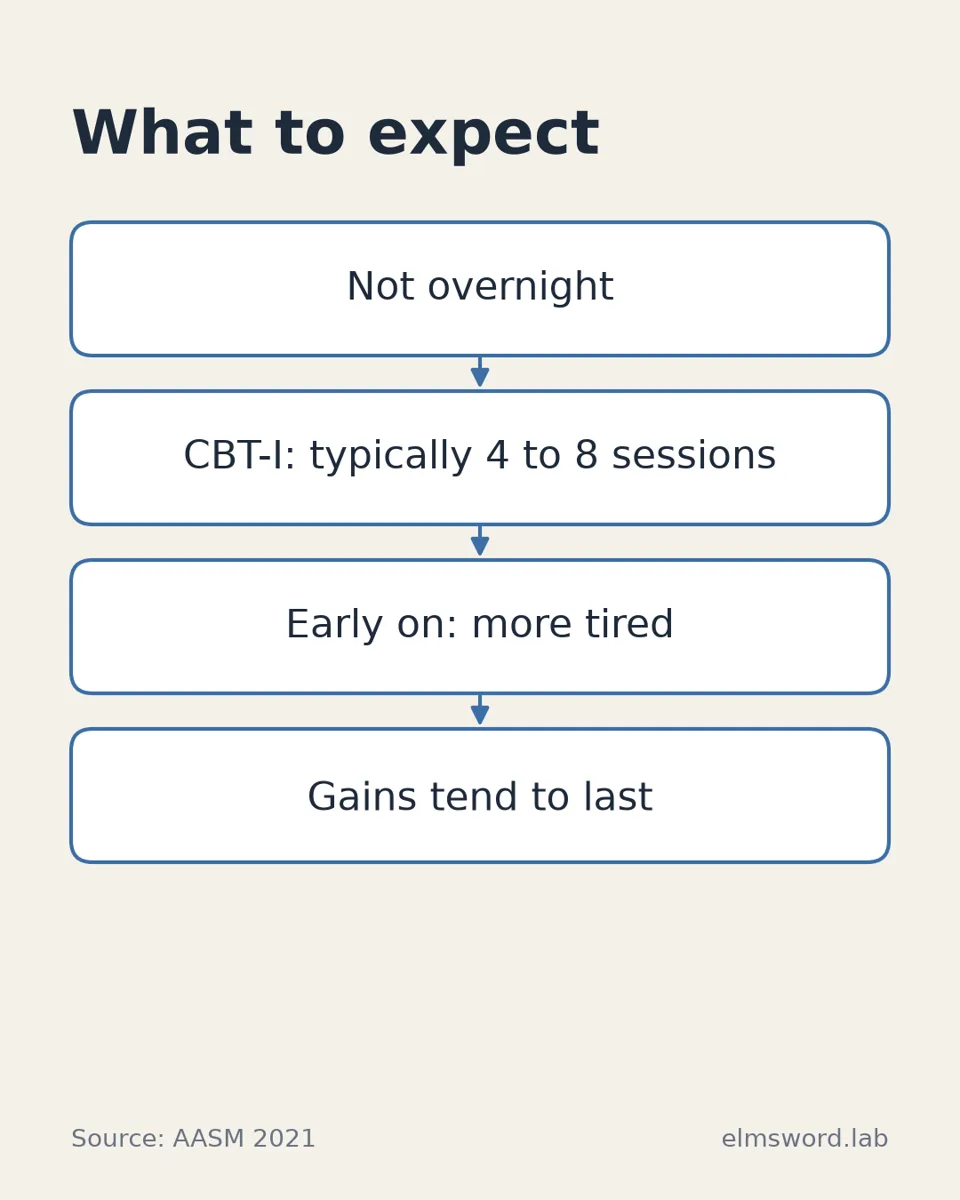
Tried sleep advice for three nights and gave up? That's normal, and also too short. The AASM guideline says improvement from behavioral insomnia treatment usually isn't immediate. CBT-I typically runs 4 to 8 sessions.
Early on it can feel worse. The guideline lists daytime tiredness, sleepiness, irritability, and trouble focusing as the main side effects, mostly in the early stages. The upside: the improvements are gradual, but they tend to last after treatment ends.
References
- ACP 2016Qaseem A, et al. Management of chronic insomnia disorder in adults: a clinical practice guideline from the American College of Physicians. Ann Intern Med. 2016.
doi.org/10.7326/M15-2175 · PubMed - AASM 2021Edinger JD, et al. Behavioral and psychological treatments for chronic insomnia disorder in adults: an American Academy of Sleep Medicine clinical practice guideline. J Clin Sleep Med. 2021.
pmc.ncbi.nlm.nih.gov/articles/PMC7853203/ - European guideline 2023Riemann D, et al. The European Insomnia Guideline: an update on the diagnosis and treatment of insomnia 2023. J Sleep Res. 2023.
doi.org/10.1111/jsr.14035 · PubMed
This guide is for education only and isn't medical advice. If sleep problems last, or come with other symptoms, talk to a doctor or a trained CBT-I provider.