
Sleep · Myths · 3 min read
Sleep hygiene and relaxation: helpful, not enough alone
Dark room, no late coffee, abdominal breathing. Where these fit, according to the AASM.
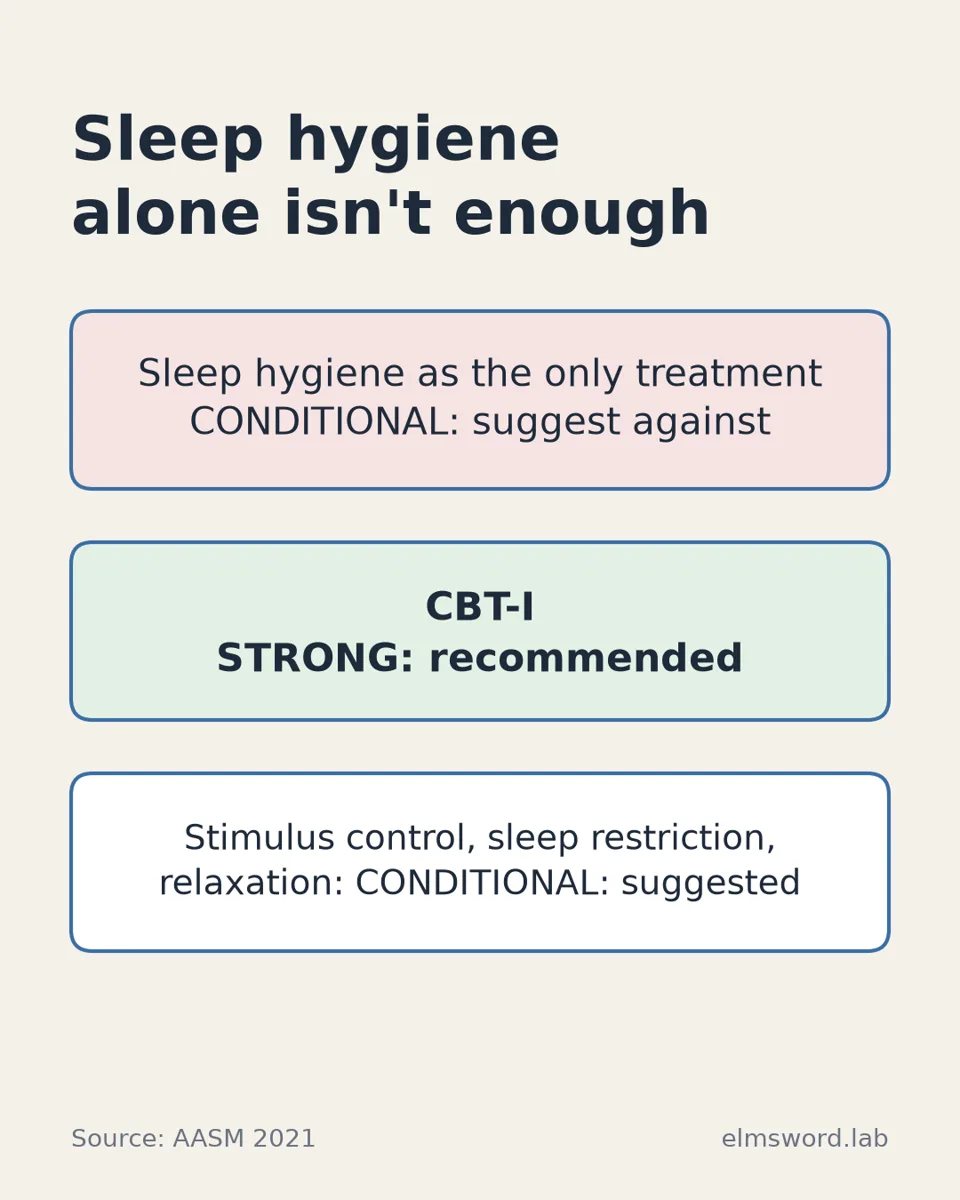
Dark, quiet room, no coffee late, and still awake at 2 am? That list is called sleep hygiene. The AASM's 2021 guideline suggests clinicians not use it as the only treatment for chronic insomnia (conditional recommendation). It was less effective than other treatments when used alone.
What to do instead
CBT-I (strong recommendation), or behavioral methods like stimulus control and sleep restriction.
Sleep hygiene isn't useless. The same guideline says common-sense parts, like avoiding excessive caffeine or alcohol, may help as part of a fuller plan. It's just not enough on its own.
Relaxation therapy
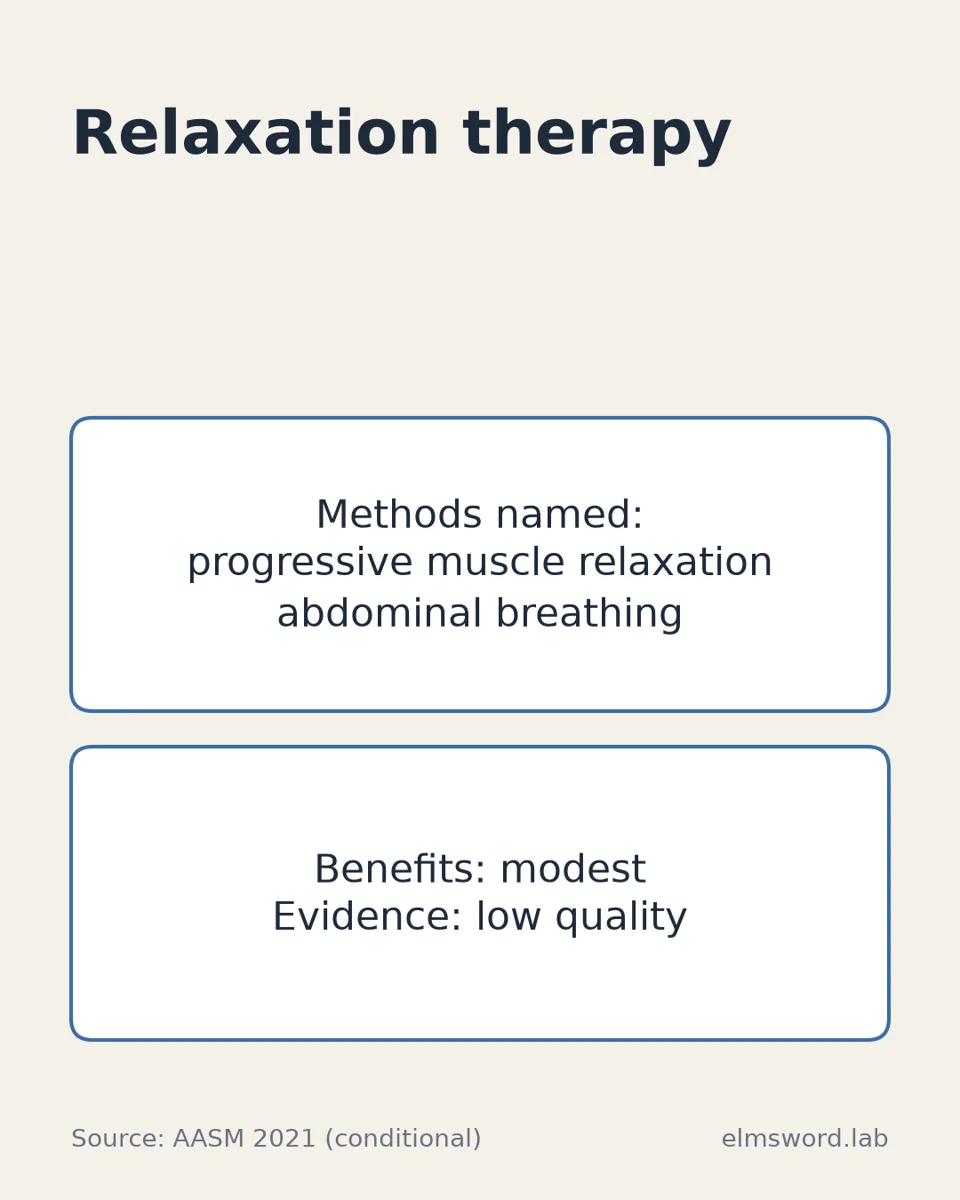
Body tense when you lie down? Relaxation therapy is one of the methods the AASM's 2021 guideline suggests (conditional recommendation). Two it names: progressive muscle relaxation and abdominal breathing.
The guideline doesn't walk you through the steps, so learn them from a CBT-I provider or a program run by one rather than guessing. Be realistic: the guideline calls the benefits modest and the evidence low quality. Use it alongside the bigger tools, not as a fix on its own.
References
- AASM 2021Edinger JD, et al. Behavioral and psychological treatments for chronic insomnia disorder in adults: an American Academy of Sleep Medicine clinical practice guideline. J Clin Sleep Med. 2021.
pmc.ncbi.nlm.nih.gov/articles/PMC7853203/ - AASM 2008Schutte-Rodin S, et al. Clinical guideline for the evaluation and management of chronic insomnia in adults. J Clin Sleep Med. 2008.
pmc.ncbi.nlm.nih.gov/articles/PMC2576317/
This guide is for education only and isn't medical advice. If sleep problems last, or come with other symptoms, talk to a doctor or a trained CBT-I provider.